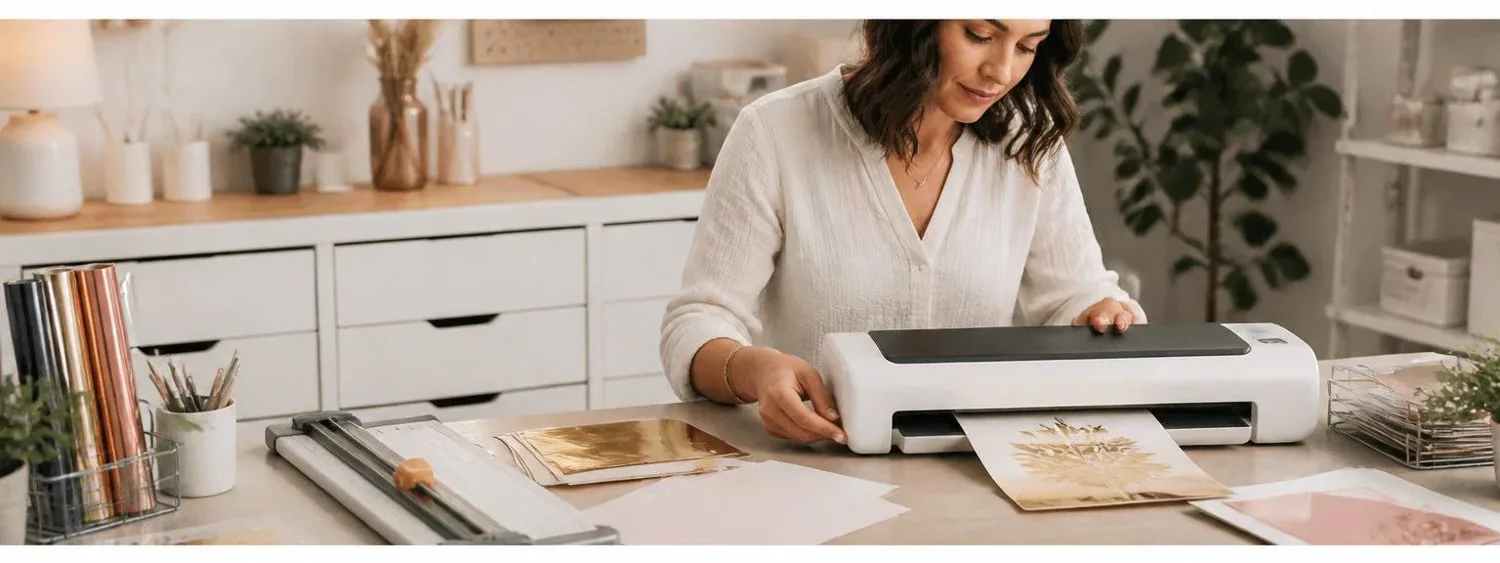
Start with LeStallion’s full shortlist: 7 Best Foil Laminators. This Render-hosted support guide turns that list into practical project questions: foil compatibility, toner prep, heat settings, roller pressure, jam control, classroom safety, and whether the machine fits real craft or office workflows.
Cloud-chain context: this follows the Surge article on leather desk blotters, moving from desk-surface organization into the equipment used for polished paper projects, labels, signs, and creative office materials.
Reactive Foil, Toner Foil, and Heat Settings
Foil compatibility test. Confirm whether the machine is meant for reactive foil over toner, standard thermal lamination, specialty transfer foils, or a mix of craft materials. A beautiful foil roll cannot fix the wrong heat range or print method.
Heat control. Temperature range, warm-up stability, and pass speed determine whether foil adheres cleanly or leaves patchy spots. For reactive foil, toner foil, and heat settings, compare the laminator by project reliability, setup time, and cleanup rather than by shiny marketing photos alone.
Project width. Throat width, pouch thickness, and feed support should match the largest certificate, menu, card sheet, or planner page you expect to run. For reactive foil, toner foil, and heat settings, compare the laminator by project reliability, setup time, and cleanup rather than by shiny marketing photos alone.
Finish quality. Good results depend on smooth roller pressure, clean paper, even toner, correct carrier use, and enough cooling space after the pass. For reactive foil, toner foil, and heat settings, compare the laminator by project reliability, setup time, and cleanup rather than by shiny marketing photos alone.
Workflow fit. Controls should be easy to understand when a project is time-sensitive, especially for classrooms, small shops, church offices, or home craft nights. For reactive foil, toner foil, and heat settings, compare the laminator by project reliability, setup time, and cleanup rather than by shiny marketing photos alone.
Safety habits. Auto shutoff, heat warnings, exterior temperature, cord placement, and a clear exit path reduce mistakes when several sheets are being processed. For reactive foil, toner foil, and heat settings, compare the laminator by project reliability, setup time, and cleanup rather than by shiny marketing photos alone.
Value signals. A strong pick includes realistic instructions, available accessories, dependable jam handling, and reviews that mention repeat use rather than one successful sample. For reactive foil, toner foil, and heat settings, compare the laminator by project reliability, setup time, and cleanup rather than by shiny marketing photos alone.
Decision note. A foil laminator should make finished paper projects look intentional: crisp edges, even shine, protected surfaces, and fewer ruined sheets. If reactive foil, toner foil, and heat settings supports that routine with simple controls and consistent pressure, it is a stronger long-term office or craft buy.
Roller Pressure, Feed Path, and Jam Control
Feed-path check. Look for straight entry, consistent roller pressure, release controls, carrier-sheet guidance, and enough throat width for the projects you actually make. Most ruined foil jobs start as a feed or pressure problem.
Heat control. Temperature range, warm-up stability, and pass speed determine whether foil adheres cleanly or leaves patchy spots. For roller pressure, feed path, and jam control, compare the laminator by project reliability, setup time, and cleanup rather than by shiny marketing photos alone.
Project width. Throat width, pouch thickness, and feed support should match the largest certificate, menu, card sheet, or planner page you expect to run. For roller pressure, feed path, and jam control, compare the laminator by project reliability, setup time, and cleanup rather than by shiny marketing photos alone.
Finish quality. Good results depend on smooth roller pressure, clean paper, even toner, correct carrier use, and enough cooling space after the pass. For roller pressure, feed path, and jam control, compare the laminator by project reliability, setup time, and cleanup rather than by shiny marketing photos alone.
Workflow fit. Controls should be easy to understand when a project is time-sensitive, especially for classrooms, small shops, church offices, or home craft nights. For roller pressure, feed path, and jam control, compare the laminator by project reliability, setup time, and cleanup rather than by shiny marketing photos alone.
Safety habits. Auto shutoff, heat warnings, exterior temperature, cord placement, and a clear exit path reduce mistakes when several sheets are being processed. For roller pressure, feed path, and jam control, compare the laminator by project reliability, setup time, and cleanup rather than by shiny marketing photos alone.
Value signals. A strong pick includes realistic instructions, available accessories, dependable jam handling, and reviews that mention repeat use rather than one successful sample. For roller pressure, feed path, and jam control, compare the laminator by project reliability, setup time, and cleanup rather than by shiny marketing photos alone.
Decision note. A foil laminator should make finished paper projects look intentional: crisp edges, even shine, protected surfaces, and fewer ruined sheets. If roller pressure, feed path, and jam control supports that routine with simple controls and consistent pressure, it is a stronger long-term office or craft buy.
Paper Stock, Pouches, and Print Preparation
Prep check. Foil work depends on paper stock, toner density, dust, humidity, pouch thickness, and whether the design is trimmed before or after the pass. The laminator is only one part of the result.
Heat control. Temperature range, warm-up stability, and pass speed determine whether foil adheres cleanly or leaves patchy spots. For paper stock, pouches, and print preparation, compare the laminator by project reliability, setup time, and cleanup rather than by shiny marketing photos alone.
Project width. Throat width, pouch thickness, and feed support should match the largest certificate, menu, card sheet, or planner page you expect to run. For paper stock, pouches, and print preparation, compare the laminator by project reliability, setup time, and cleanup rather than by shiny marketing photos alone.
Finish quality. Good results depend on smooth roller pressure, clean paper, even toner, correct carrier use, and enough cooling space after the pass. For paper stock, pouches, and print preparation, compare the laminator by project reliability, setup time, and cleanup rather than by shiny marketing photos alone.
Workflow fit. Controls should be easy to understand when a project is time-sensitive, especially for classrooms, small shops, church offices, or home craft nights. For paper stock, pouches, and print preparation, compare the laminator by project reliability, setup time, and cleanup rather than by shiny marketing photos alone.
Safety habits. Auto shutoff, heat warnings, exterior temperature, cord placement, and a clear exit path reduce mistakes when several sheets are being processed. For paper stock, pouches, and print preparation, compare the laminator by project reliability, setup time, and cleanup rather than by shiny marketing photos alone.
Value signals. A strong pick includes realistic instructions, available accessories, dependable jam handling, and reviews that mention repeat use rather than one successful sample. For paper stock, pouches, and print preparation, compare the laminator by project reliability, setup time, and cleanup rather than by shiny marketing photos alone.
Decision note. A foil laminator should make finished paper projects look intentional: crisp edges, even shine, protected surfaces, and fewer ruined sheets. If paper stock, pouches, and print preparation supports that routine with simple controls and consistent pressure, it is a stronger long-term office or craft buy.
Craft Room, Classroom, and Office Use Cases
Use-case map. A craft-room laminator may prioritize foil shine and specialty projects, while a classroom or office unit may need faster warm-up, simpler controls, safer handling, and reliable everyday pouch lamination.
Heat control. Temperature range, warm-up stability, and pass speed determine whether foil adheres cleanly or leaves patchy spots. For craft room, classroom, and office use cases, compare the laminator by project reliability, setup time, and cleanup rather than by shiny marketing photos alone.
Project width. Throat width, pouch thickness, and feed support should match the largest certificate, menu, card sheet, or planner page you expect to run. For craft room, classroom, and office use cases, compare the laminator by project reliability, setup time, and cleanup rather than by shiny marketing photos alone.
Finish quality. Good results depend on smooth roller pressure, clean paper, even toner, correct carrier use, and enough cooling space after the pass. For craft room, classroom, and office use cases, compare the laminator by project reliability, setup time, and cleanup rather than by shiny marketing photos alone.
Workflow fit. Controls should be easy to understand when a project is time-sensitive, especially for classrooms, small shops, church offices, or home craft nights. For craft room, classroom, and office use cases, compare the laminator by project reliability, setup time, and cleanup rather than by shiny marketing photos alone.
Safety habits. Auto shutoff, heat warnings, exterior temperature, cord placement, and a clear exit path reduce mistakes when several sheets are being processed. For craft room, classroom, and office use cases, compare the laminator by project reliability, setup time, and cleanup rather than by shiny marketing photos alone.
Value signals. A strong pick includes realistic instructions, available accessories, dependable jam handling, and reviews that mention repeat use rather than one successful sample. For craft room, classroom, and office use cases, compare the laminator by project reliability, setup time, and cleanup rather than by shiny marketing photos alone.
Decision note. A foil laminator should make finished paper projects look intentional: crisp edges, even shine, protected surfaces, and fewer ruined sheets. If craft room, classroom, and office use cases supports that routine with simple controls and consistent pressure, it is a stronger long-term office or craft buy.
Warm-Up Time, Safety, Odor, and Noise
Room comfort check. Warm-up time, exterior temperature, odor, motor noise, auto-shutoff, and cool-down space matter if the laminator sits near students, clients, shared desks, or a small home office.
Heat control. Temperature range, warm-up stability, and pass speed determine whether foil adheres cleanly or leaves patchy spots. For warm-up time, safety, odor, and noise, compare the laminator by project reliability, setup time, and cleanup rather than by shiny marketing photos alone.
Project width. Throat width, pouch thickness, and feed support should match the largest certificate, menu, card sheet, or planner page you expect to run. For warm-up time, safety, odor, and noise, compare the laminator by project reliability, setup time, and cleanup rather than by shiny marketing photos alone.
Finish quality. Good results depend on smooth roller pressure, clean paper, even toner, correct carrier use, and enough cooling space after the pass. For warm-up time, safety, odor, and noise, compare the laminator by project reliability, setup time, and cleanup rather than by shiny marketing photos alone.
Workflow fit. Controls should be easy to understand when a project is time-sensitive, especially for classrooms, small shops, church offices, or home craft nights. For warm-up time, safety, odor, and noise, compare the laminator by project reliability, setup time, and cleanup rather than by shiny marketing photos alone.
Safety habits. Auto shutoff, heat warnings, exterior temperature, cord placement, and a clear exit path reduce mistakes when several sheets are being processed. For warm-up time, safety, odor, and noise, compare the laminator by project reliability, setup time, and cleanup rather than by shiny marketing photos alone.
Value signals. A strong pick includes realistic instructions, available accessories, dependable jam handling, and reviews that mention repeat use rather than one successful sample. For warm-up time, safety, odor, and noise, compare the laminator by project reliability, setup time, and cleanup rather than by shiny marketing photos alone.
Decision note. A foil laminator should make finished paper projects look intentional: crisp edges, even shine, protected surfaces, and fewer ruined sheets. If warm-up time, safety, odor, and noise supports that routine with simple controls and consistent pressure, it is a stronger long-term office or craft buy.
Cleaning Sheets, Warranty, Durability, and Value
Ownership check. Cleaning sheets, jam release, replacement carriers, warranty language, roller durability, and support availability shape long-term value more than a single shiny demo print.
Heat control. Temperature range, warm-up stability, and pass speed determine whether foil adheres cleanly or leaves patchy spots. For cleaning sheets, warranty, durability, and value, compare the laminator by project reliability, setup time, and cleanup rather than by shiny marketing photos alone.
Project width. Throat width, pouch thickness, and feed support should match the largest certificate, menu, card sheet, or planner page you expect to run. For cleaning sheets, warranty, durability, and value, compare the laminator by project reliability, setup time, and cleanup rather than by shiny marketing photos alone.
Finish quality. Good results depend on smooth roller pressure, clean paper, even toner, correct carrier use, and enough cooling space after the pass. For cleaning sheets, warranty, durability, and value, compare the laminator by project reliability, setup time, and cleanup rather than by shiny marketing photos alone.
Workflow fit. Controls should be easy to understand when a project is time-sensitive, especially for classrooms, small shops, church offices, or home craft nights. For cleaning sheets, warranty, durability, and value, compare the laminator by project reliability, setup time, and cleanup rather than by shiny marketing photos alone.
Safety habits. Auto shutoff, heat warnings, exterior temperature, cord placement, and a clear exit path reduce mistakes when several sheets are being processed. For cleaning sheets, warranty, durability, and value, compare the laminator by project reliability, setup time, and cleanup rather than by shiny marketing photos alone.
Value signals. A strong pick includes realistic instructions, available accessories, dependable jam handling, and reviews that mention repeat use rather than one successful sample. For cleaning sheets, warranty, durability, and value, compare the laminator by project reliability, setup time, and cleanup rather than by shiny marketing photos alone.
Decision note. A foil laminator should make finished paper projects look intentional: crisp edges, even shine, protected surfaces, and fewer ruined sheets. If cleaning sheets, warranty, durability, and value supports that routine with simple controls and consistent pressure, it is a stronger long-term office or craft buy.
Shortlist by project reliability first
Before judging a shiny sample, define foil type, paper stock, print method, project width, heat control, feed-path safety, and cleaning routine. Then compare the candidates in 7 Best Foil Laminators.
Final buying note
A useful foil laminator makes repeat projects calmer: fewer jams, better adhesion, safer handling, and cleaner finished sheets. Use the LeStallion shortlist as the product layer after these workflow questions are answered.